
Taking Up Space at the Ballot Box: What on Your Ballot Touches Your Body?
Oct 06, 2026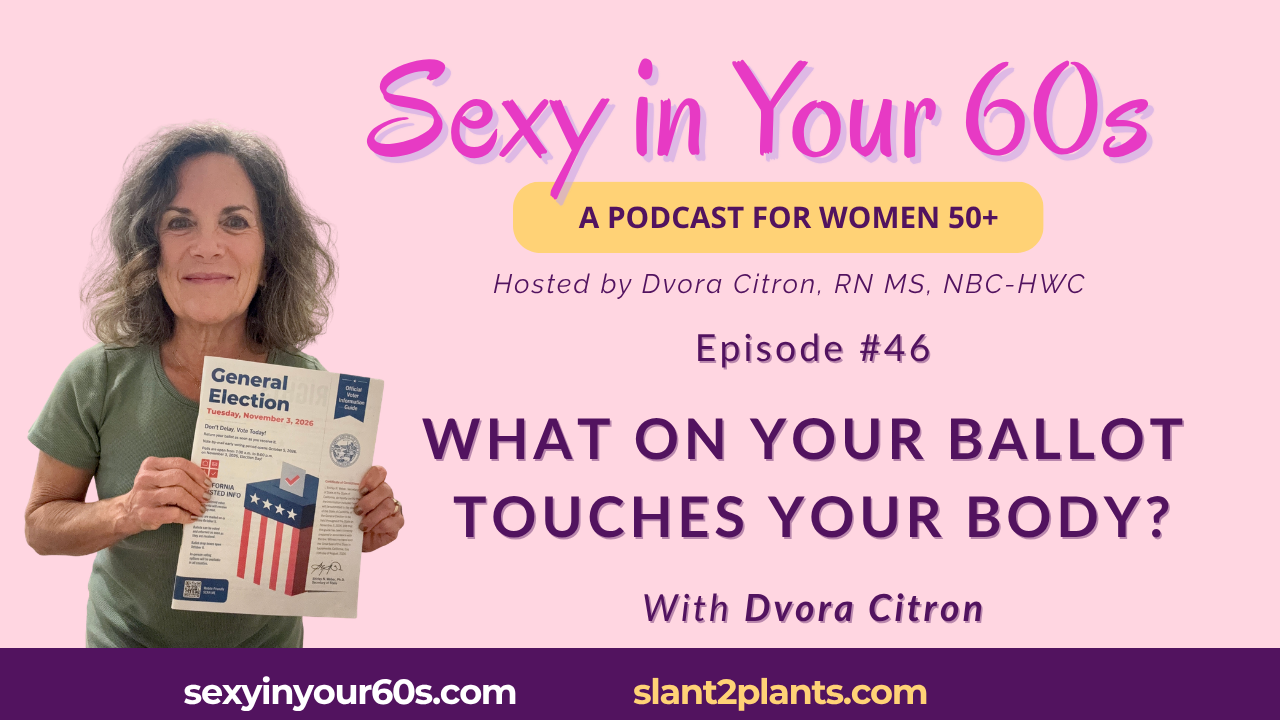
My favorite movie, for as long as I can remember, has been Mary Poppins. Part of that is family. My uncle, Robert B. Sherman, wrote the music and lyrics with his brother, Richard Sherman. One of my favorite songs in it has always been "Sister Suffragette," the one Mrs. Banks sings when she sweeps into the house, fresh from a rally for votes for women.
Of course I learned about Susan B. Anthony in school. She was arrested in 1872 for casting a ballot, and she died in 1906, fourteen years before the Nineteenth Amendment gave women the right to vote. I knew those facts. The song is what made them feel real to me. What I did not understand as a little girl is that the fight does not end once you win the vote. You still have to use it.
So this season, on Sexy in Your 60s with Dvora Citron, I want to ask you one question and have you hold onto it: what on your ballot touches your body?
I am not going to tell you who to vote for. I have listeners in every party, and I want every one of you in the room. I want you to know what is at stake for your health, and then vote your values.
Health decisions are made in rooms most of us never enter
I was a nurse for almost forty years. Within my first year at Alta Bates Hospital in Berkeley, the nurses went on strike, and I was not going to cross the picket line. I saw the same thing over and over after that. The conditions of care were not being decided at the bedside. They were being decided in rooms most nurses and patients never enter.
As a school nurse, I worked half-time for almost my entire career. With COVID funding, the district paid for full-time school nurses for a while, and everyone loved having the nurse at school every day. Then I was at school the day a student overdosed on fentanyl. The kids knew to come get me, I brought Narcan, and she lived. When the money ran out, the district dropped us back to half-time anyway.
That is when I finally understood something. Health decisions are made by elected people in meetings most of us never attend. If you want something protected, you have to show up for it yourself.
Your vote is bigger than you think
Maybe you are wondering whether your one vote matters. In the 2022 midterms, people 65 and older made up 30.4 percent of all voters while being only 23.8 percent of eligible citizens. Women 50 and over cast nearly a third of all ballots in 2018 and 2020, which AARP calls the largest group of swing voters in the country.
So the honest answer is not "every vote counts," the thing we tell children. The honest answer is that women our age are the voters close elections turn on.
Three places your health is on the line
Your insurance before Medicare. If you retire before 65 or work for yourself, you may buy your insurance on the marketplace. The extra help Congress gave with those premiums expired at the end of 2025. For the average person who was getting help, premium payments doubled, and for a middle-income 60-year-old, premiums went up by more than $10,000. Women our age are hit the hardest because marketplace prices rise with age. Whether that help comes back depends on who controls Congress. The House voted to restore it in January. When I recorded this episode, it had not become law.
Menopause research. On September 16, the Senate held the first congressional hearing ever devoted to menopause. It was chaired by a Republican, Rick Scott, with a Democrat, Kirsten Gillibrand, as ranking member. Testimony noted that NIH funding dedicated to menopause research was about $78 million in 2025. A bill from Senators Patty Murray and Lisa Murkowski, a Democrat and a Republican, would authorize $275 million over five years, and it has not become law. Any bill that does not pass before this Congress ends in January has to start over.
In Episode 42, The Table, I told you what hormone therapy has meant to me. Whether we understand what is truly safe for our bodies, and whether our doctors are trained in menopause at all, depends on research. Research depends on funding.
Medicare and Medicaid. I just turned 65, so I am paying attention. Medicare's first negotiated drug prices took effect this January, and the out-of-pocket cap for prescriptions this year is $2,100. Under a new federal rule, certain adults on Medicaid must meet an 80-hour-a-month work requirement, with most states starting by January 1. Protections like these can be expanded or undone, in Congress and in your state house.
A California story about speaking up
In 2024, a bill to require insurance coverage for menopause treatment passed our state legislature, and the governor vetoed it. The next year, the author brought it back. That bill passed the Assembly 70 to 1 and the Senate 39 to 0. In a legislature where people agree on almost nothing, nearly every member from both parties voted yes, and it was vetoed again.
Most of us would have stopped there. The women did not. Doctors testified. Researchers testified, including a brain scientist from right here in the East Bay. Women called and wrote. This year, menopause care was written into the state budget. Health plans that cover prescriptions now have to cover medically necessary FDA-approved treatments for menopause, perimenopause and postmenopause, including hormone therapy and non-hormonal options, on private insurance and on Medi-Cal.
As a nurse, this part got me: the law directs the nursing board to consider menopause education for nurses. If you have ever felt dismissed in the exam room, you know why that matters. It took three years, two vetoes, and a lot of women who refused to be quiet. That is what showing up looks like.
Where to look on your ballot
Congress. Every House seat and about a third of the Senate are on the ballot. That is where marketplace premiums and menopause research funding will be decided. Look up your representative, and if your state has a Senate race this year, look that up too.
Governor, if you are in California. We are choosing between Xavier Becerra and Steve Hilton. The menopause money in this year's budget was one-time funding. The next governor decides whether it continues, and whether to sign or veto the next menopause bill.
Your state legislature. The menopause bills I just described passed there twice. Every state has one, and most of us could not name our own representative in it. Find out who yours is.
Reproductive health. Voters in Idaho, Missouri, Nevada and Virginia will decide measures on abortion this November, and they go in different directions. I know how polarized and emotional this issue is, and that many people's views come from deep religious beliefs. As a nurse, I believe women should be in charge of their own bodies, making decisions based on sound, evidence-based guidelines and strong scientific clinical research. You may see it differently, and you are welcome here. Whatever you believe, if you live in one of those states, read the actual measure, not the ad about it.
Your one thing this week: a voting plan
It takes about fifteen minutes.
- Check that you are registered at vote.org.
- Pull up your full ballot, every line of it.
- Pick one race you would normally skip and one health issue from this post, and look up where the candidates stand using a nonpartisan guide like Vote411 from the League of Women Voters, or CalMatters if you are in California.
- Decide how and when you will vote, and put it on your calendar.
In California, ballots are arriving now. If you are not registered, do it by October 19. If you miss that, you can still register and vote in person at your county elections office or a vote center all the way through Election Day. Wherever you live, check your deadline today, because the rules are different in every state.
Taking up space in your voice
This season I keep coming back to one question: where am I still making myself smaller? For a lot of us, the answer includes the ballot. We vote the top line and leave the rest blank. We assume our vote is one of millions. We let other people tell us what a measure means. Caring for yourself has always included showing up for each other, and this is one of the places it counts most.
Taking up space in your voice means reading the whole ballot, forming your own view, and casting it like it counts, because for women our age, it does.
Many of us vote at the kitchen table now, but the idea is the same as the old voting booth with its curtain. It is the one place a woman gets to take up all the room she wants, with no one watching and no one to please. Mrs. Banks would want you to step in. So would Mary Poppins.
I am not telling you who to vote for. The vote belongs to you.
Listen to the Full Episode
Episode 46: Taking Up Space at the Ballot Box
🎧 Podcast Page
🍎 Apple Podcasts
🟢 Spotify
🎵 Amazon Music
▶️ Watch on YouTube
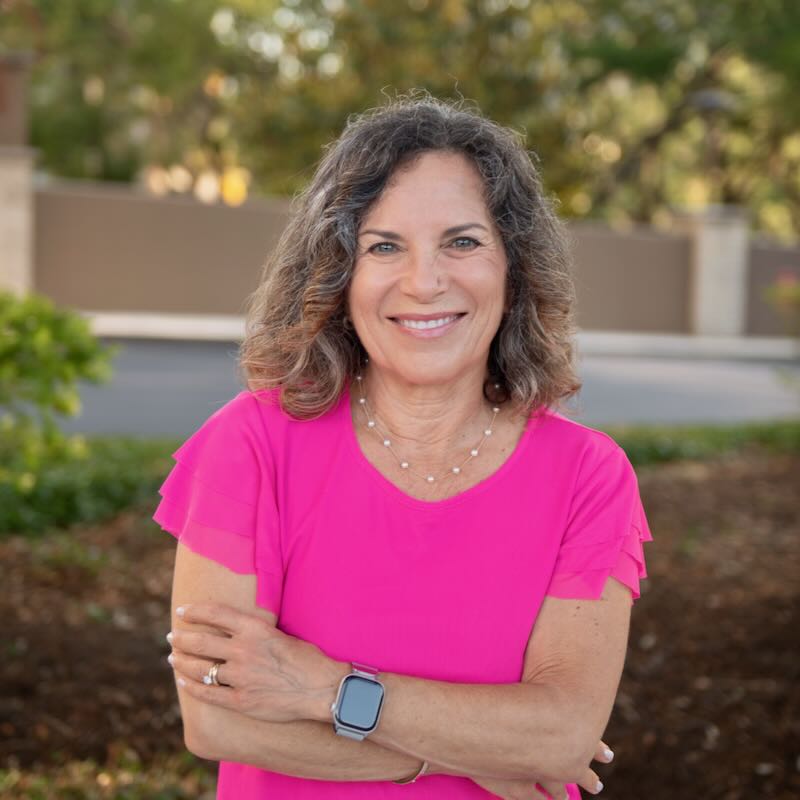
About Dvora Citron
Dvora Citron is a Registered Nurse, National Board Certified Health & Wellness Coach, Lifestyle Medicine Practitioner, and the founder of slant2plants®. She hosts Sexy in Your 60s to bring women the real ingredients of vibrant aging through science, story, support, and soul.
slant2plants.com
Blog
Instagram @slant2plants
LinkedIn
Pinterest
Answer the Season's Three Questions With Me, Live
The 5-Minute Reality Check for Women 50+ is a free, one-hour live workshop on Thursday, November 19. Bring your answers to where you are already taking up space, where you are still making yourself smaller, and what feels newly available to you now.
Not ready for a live workshop? Start with the free Starter Guide.
Nothing in this post is medical advice. It is education and lived experience. Anything you are weighing for your own health is a decision to make with your own healthcare provider, who knows your history and your whole picture.
Which One Are You Avoiding?
Strength, fiber, sleep, alcohol. These are the four foundations that matter most after 50, and most women are solid on three.
The 5-Minute Reality Check is a free live workshop. You'll get an honest score across all four, find your blind spot, and leave with a seven-day move you can actually follow, plus a minimum version for the weeks that fall apart.
Live on Zoom. No replay.
Author
About Dvora Citron
I'm a Registered Nurse with 40+ years of experience, a National Board Certified Health and Wellness Coach, and the founder of slant2plants®, a plant-forward approach to vibrant living, healthy aging, and feeling fully alive in your 60s and beyond.
I write, teach, and coach women over 50 who are ready to nourish their bodies, reclaim their energy, and step into the most confident chapter of their lives.
🎙️ Listen to the Sexy in Your 60s™ podcast: interviews with women and experts on healthy aging, longevity, and what it truly means to feel grounded, confident, and at home in your life after 50.
📅 Ready to go deeper? Book a free Health Coaching Discovery Call
