
Taking Up Space in the Exam Room: You Are the Leader of Your Medical Team
Sep 01, 2026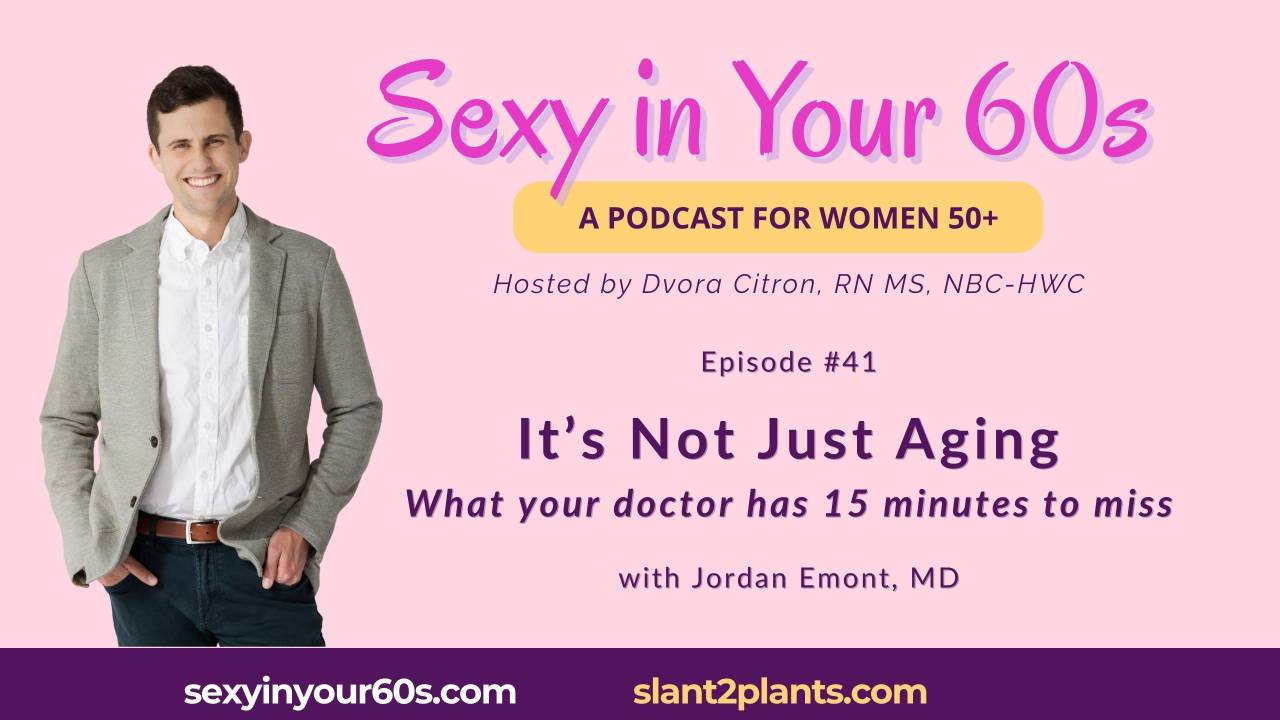
Before we start: this article and the episode it comes from are general education, not medical advice. I am a Registered Nurse and a National Board Certified Health & Wellness Coach, not your clinician. Dr. Emont is not your physician. Nothing here creates a patient relationship or replaces one. Hormone therapy and every other treatment discussed carries individual risks and benefits that depend on your own history. Talk with your own clinician before you change anything about your care.
I pay out of pocket for a concierge gynecologist. If I need her, I can usually be seen within the week. I have also spent months trying to get established with a gynecologist inside the insurance plan I am actually covered under, as a backstop. The appointment I finally landed, just an introductory visit, is in November.
Same city, same body, same questions. The easy explanation is money, and I believed that one for a long time. It is not money. It is a system that decides how much time a doctor is allowed to give you, and the physicians pushing back against it are giving up real security to do it.
I have spent forty years in nursing, twenty-five of them as a school nurse, and I still could not get myself in the door any faster. That is the gap I wanted to talk about with Dr. Jordan Emont, and it is why I wanted him early in this season. This season is about taking up space, about all the places women over 50 were quietly taught to make themselves smaller. Few places do that more efficiently than an exam room.
Dr. Emont is a board-certified OBGYN and a certified menopause practitioner with degrees in medicine and public health. His consultations run 60 to 90 minutes, and he told me they usually run longer than that. He splits his week between his own telehealth practice and a community health center, which means he is not theorizing about the difference between those two worlds. He lives in both of them every week.
He finished residency at Columbia and knew nothing about menopause
He went into obstetrics and gynecology on purpose, because he believed every single appointment was a chance to advocate for a woman who might not be advocated for anywhere else. He trained at Columbia. He walked out feeling like a good doctor.
Then his first patient sat down and said she was having menopause symptoms.
“I have learned nothing about menopause in four years of residency at one of the top institutions in the world.”
He told me the whole thing was infuriating. He had chosen the field because he cared about women, trained at one of the best programs in the country to be good at it, and then could not answer the first question the first patient asked him. When I asked whether medical education has improved since, he was honest. He said there is more interest now and curricula are starting to shift, but that he did not finish residency long ago, and menopause took up roughly one afternoon of his training. He works at Stanford now, and from talking with current residents there, it is still not a prominent part of what they learn.
Why your doctor only has fifteen minutes
This is the part I most wanted him to explain, because women are furious at their doctors and he thinks the anger is aimed at the wrong target.
Most clinicians are paid against something called an RVU, a relative value unit. Every physician service has a billing code, and every code carries a point value: a hip replacement, an eight-minute telehealth call, a long conversation about menopause. Those values are recommended by a committee of medical specialty societies and then adopted by Medicare, and most private insurers follow the same scoring. Which means the system that undervalues your appointment was built in part by physicians themselves. Your practice pays you a salary and requires you to hit an RVU minimum every month. The scoring is weighted heavily toward procedures, and the difference between a 15-minute visit and a 40-minute visit is small. So a long, thoughtful conversation is one of the least rewarded things a doctor can do with an hour.
“It’s not that I don’t care, it’s not that I don’t want to spend more time. It’s that the way that we have decided healthcare should be provided in our country is in a system where the more patients that you see, the more that your system is able to make money.”
The arithmetic ends up requiring 20 to 40 patients a day. A primary care doctor inside that system is typically responsible for 2,000 to 3,000 people. Then there is another hour or two of documentation every night at home. He described a version of the job going around online: imagine 25 to 30 meetings a day, you do not know what most of them are about until you walk in, you have to be at your best for every one, and each has to end with a deliverable.
He does not think clinicians should be let off the hook entirely. He agrees lifestyle medicine deserves far more room in medical training than it gets. His point is that a system built on volume will not produce the visit you need, no matter how much your doctor wants to give it to you.
The middle path he thinks more women should know about
He is candid that his own practice is a concierge model, and that concierge care sits in direct tension with equity. Most women cannot buy their way into a 90-minute appointment.
So he pointed to direct primary care, or DPC, as the option in between. The practice charges a flat membership, usually 80 to 100 dollars a month, and anything that can still run through insurance does: labs, imaging, prescriptions. What the membership buys is time. Panel sizes drop from 2,000 or 3,000 patients to 300 or 500.
I pushed back on this, and I want to keep my pushback in the record. I am watching physicians move into DPC mainly to make their patient load survivable, not because they have any training in lifestyle medicine. More time and the same thin script does not help you. He did not dismiss it. He knows DPC doctors who are board certified in lifestyle medicine and built their practices around it, and he knows plenty who are not. So the question to ask a practice is not whether they offer longer visits. It is what they are actually trained to do with the extra time.
What I do not want to take away from any of them is the cost of the choice. Walking away from a salaried position to build a practice around longer visits means giving up institutional backing, a predictable income, and a lot of protection. The physicians doing it are absorbing that risk personally so they can practice the way they believe medicine is supposed to work. That is not a small thing, and it is worth saying plainly in a piece that is otherwise hard on the system they left.
The first symptom is “I don’t feel like myself”
Ask him what gets missed most and he does not start with hot flashes.
“I always say that the first symptom of perimenopause is, I just don’t feel like myself.”
He said there is a common variation on it too, which is a woman who suddenly cannot stand a partner she has loved for decades. What is happening is that stress she used to absorb without effort is no longer absorbable. Nobody else may notice. She notices. And because there is no diagnostic code for “I don’t feel like myself,” there is no medication for it, which is exactly why so many women get told they are just tired, just stressed, just getting older.
Then there are the changes she can see, like weight settling around the middle despite doing everything she has always done. And then the ones she cannot see at all: blood pressure that was never high before, cholesterol that was never high before, prediabetes out of nowhere.
He walked through the mechanism for each one. Estrogen affects the flexibility of blood vessels and the production of nitric oxide, which is part of why blood pressure climbs. Estrogen affects the LDL receptors on the liver, which is part of why cholesterol climbs. Estrogen loss drives insulin resistance, which drives both the visceral fat and the prediabetes. And estrogen affects sleep, which worsens all three.
His frustration is not that women get treated for these things. It is that almost nobody connects them to the transition causing them. As he put it, these are the things that kill people. Heart disease is the leading cause of death in women, and the menopause transition is rarely named as part of that conversation.
“Menopause is not a gynecologic condition”
I asked him to say that one again, slowly, because it is the most useful sentence in the entire episode.
“Menopause is not a gynecologic condition. Menopause is a full body condition.”
It is also not a disease. It is a life transition that happens to every woman who lives long enough, and it touches her heart, her bones, her brain, her metabolism, and her sleep. Which means every specialty is going to treat a woman in menopause, including pediatrics, because some women go through it in their teens and twenties.
His conclusion follows directly: we have to stop pretending only OBGYNs can handle this. There are not enough of them, and not enough of those are trained in it. He believes every physician should be able to prescribe hormone therapy with confidence, because every specialty stands to benefit from what it does.
He traces the reluctance to one place. Most doctors practicing today trained in the long shadow of the 2002 Women’s Health Initiative, in an era that taught hormone therapy was among the most dangerous things a woman could do to her body, to be used at the lowest dose for the shortest possible time and only for the most extreme symptoms. He says the evidence points the other way, and that for the vast majority of women hormone therapy is one of the safest interventions available to them.
I will add my own note here, because I brought this to my new primary care physician and she told me plainly that she was not comfortable managing it. That is where we are. The knowledge has moved and the workforce has not caught up yet.
The women who are told to be grateful
The group he has planted his flag with is cancer survivors, particularly women who have had breast cancer. They are routinely told hormones are off the table, full stop, and then told nothing else.
He considers those two entirely separate conversations. Set hormones aside completely if that is the right call for her. What is unacceptable is what happens next, which is that her menopause symptoms get waved away too. He has had patients tell him, in his own words, that they were informed this is just part of getting breast cancer, and that they should be grateful to be alive.
His answer to that is time. Ninety minutes, a full lab panel reviewed together, and a line-by-line accounting of everything affecting her life and every small thing that might move it.
“My job is to say, how are we going to now help you live the life that was just saved by your oncologist?”
The conversation almost nobody starts
Sexual health concerns are extremely common after menopause, and almost nobody starts the conversation. He put the gap at roughly 90 percent of women wanting their clinician to raise the subject first, against it actually being raised 10 to 20 percent of the time. Published surveys land in a similar place on the clinician side, with one large study finding only about 19 percent of menopausal women had been asked about sexual health at all.
So the room is full of people waiting for the other person to speak. He thinks that falls on the clinician, and he named a resource worth writing down: ISSWSH, the International Society for the Study of Women’s Sexual Health, which keeps a find-a-provider directory. It is where he sends women looking for a qualified clinician, including for menopause generally.
I asked him to make room for one more group before we moved on, and I will say it here too. Women who are not partnered have a sexual and sensual life that deserves the same attention. I do not want that to be a silent category.
How to be heard in fifteen minutes
When I asked what he wants a woman to believe about her own body and her own voice, his answer was practical.
Describe your symptoms in terms of what they are costing you. Not “I have hot flashes,” but “I have hot flashes so severe I cannot sleep.” Not “I have brain fog,” but “I have brain fog so severe I cannot work the way I used to.” Function is the language that gets a clinician to lean in.
And if the person across from you does not know the answer, it is fair to ask who does. Ask them who they can send you to.
“All people deserve a conversation about their menopause. All people can be helped at least a little bit with their symptoms. You just have to find the right person who really knows what they’re doing.”
This is what I mean when I say I want you to become the CEO of your own healthy aging. Your oncologist, your cardiologist, your gynecologist, and your primary care physician each see you through one lens, and each of those lenses is real and limited. Nobody is standing above all of them holding the whole picture. Except you.
What sexy means to Dr. Jordan Emont
I close every interview by asking what sexy means to my guest right now. His answer surprised me a little.
He said there are a lot of women who feel sexiest in this exact phase of life, and that what separates them from the women who do not is a decision. Deciding that this is the most remarkable period of your life so far, and then taking charge of it: how you live, who you let take care of you, and what you choose about your own care.
Then he added, with no ceremony at all, that vaginal estrogen is very sexy, because it helps with nearly everything and it is good for almost everyone.
One thing to do this week
Notice one place where you have been waving off your own symptoms, telling yourself it is just aging or that somebody else comes first. Write it down, take it seriously, and say it out loud to a clinician who will listen, or to yourself for now if that is where you have to start.
One more time, because it matters on this one
This article and this episode are general education, not medical advice, and not a substitute for care from your own clinician. I am a Registered Nurse and a National Board Certified Health & Wellness Coach. I am not your nurse and Dr. Emont is not your doctor. Hormone therapy in particular is not right for everyone, and whether it is right for you depends on your personal and family history, your other conditions, and your own clinician's judgment. Please do not start, stop, or change any treatment based on a podcast. Bring it to the person who knows your chart.
Listen to the Full Episode
Episode 41: Taking Up Space in the Exam Room: You Are the Leader of Your Medical Team with Dr. Jordan Emont
🎧 Podcast Page
🍎 Apple Podcasts
🟢 Spotify
🎵 Amazon Music
▶️ Watch on YouTube
Connect with Dr. Jordan Emont
drjordanemont.com
Dr. Jordan Emont on Substack
Instagram @drjordanemont
ISSWSH find-a-provider directory
About Dvora Citron
Dvora Citron is a Registered Nurse, National Board Certified Health & Wellness Coach, Lifestyle Medicine Practitioner, and the founder of Slant2Plants®. She hosts Sexy in Your 60s to bring women the real ingredients of vibrant aging through science, story, support, and soul. Her work helps women 50 and older create the health, confidence, and longevity they want in ways that feel realistic and sustainable.
slant2plants.com
Blog
Instagram @slant2plants
LinkedIn
Pinterest
Where to Go Next
If you are not sure where you are standing right now, start with The 5-Minute Reality Check for Women 50+. It is a live workshop I run once a month, about an hour, and the next date is on the page.
And if you are ready to look at something you have been carefully not looking at, I am running a four-week live experience starting October 8. It is called Emerge: The Naked Truth, and it is about what actually changed in your body after 50 and what you can do about it. Details at slant2plants.com/emerge
The next round of the Sexy in Your 60s Coaching Experience is coming in early 2027. Join the waitlist here
Which One Are You Avoiding?
Strength, fiber, sleep, alcohol. These are the four foundations that matter most after 50, and most women are solid on three.
The 5-Minute Reality Check is a free live workshop. You'll get an honest score across all four, find your blind spot, and leave with a seven-day move you can actually follow, plus a minimum version for the weeks that fall apart.
Live on Zoom. No replay.
Author
About Dvora Citron
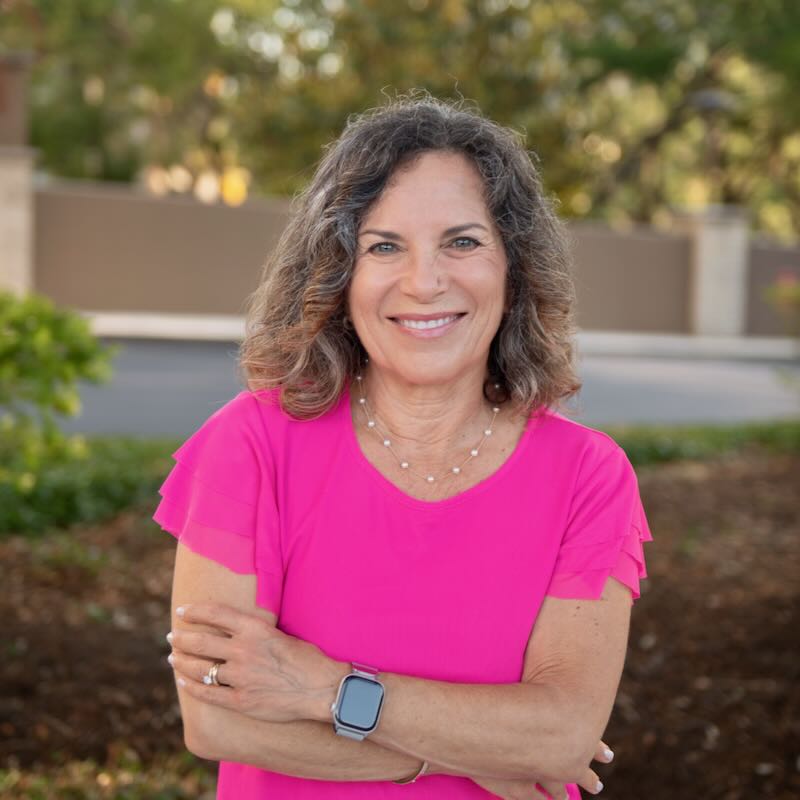
I'm a Registered Nurse with 40+ years of experience, a National Board Certified Health and Wellness Coach, and the founder of slant2plants®, a plant-forward approach to vibrant living, healthy aging, and feeling fully alive in your 60s and beyond.
I write, teach, and coach women over 50 who are ready to nourish their bodies, reclaim their energy, and step into the most confident chapter of their lives.
🎙️ Listen to the Sexy in Your 60s™ podcast: interviews with women and experts on healthy aging, longevity, and what it truly means to feel grounded, confident, and at home in your life after 50.
📅 Ready to go deeper? Book a free Health Coaching Discovery Call
