
Taking Up Space at the Table: First We Grieve the Body We Thought We Would Have
Sep 08, 2026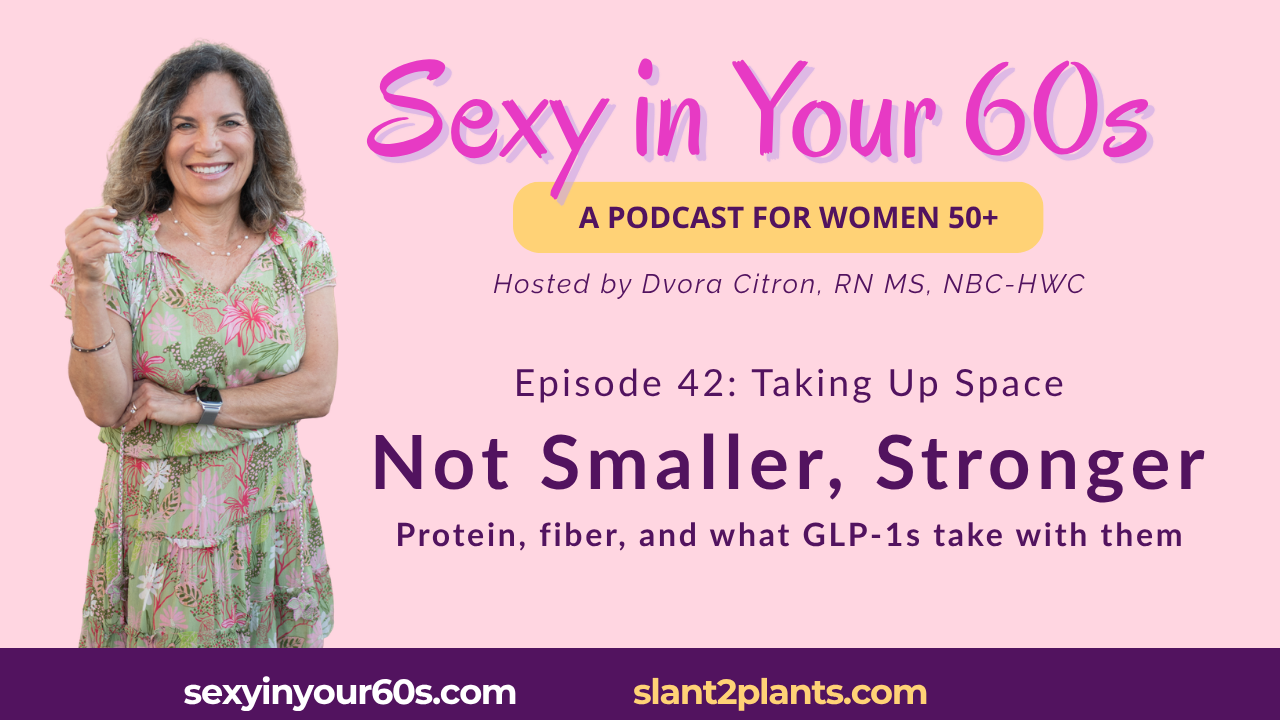
Before we start: this article and the episode it comes from are general education, not medical advice. I am a Registered Nurse and a National Board Certified Health & Wellness Coach, not your nurse and not your doctor. This piece discusses fasting, GLP-1 medications and hormone therapy. Nothing here creates a clinical relationship or replaces one. Please talk with your own healthcare provider about what is right for you before you change anything.
When I was three, my parents had to coax me to eat. I hid my vegetables around the rim of the plate, slid them into a napkin, and walked them to the bathroom trash, convinced that nobody noticed. That is funny to me now, because vegetables are practically my profession and definitely my obsession.
My mom cooked every dinner when we were growing up. My grandfather was a wonderful cook too, and he taught us the Jewish recipes. Nobody in our house got a bigger plate. Food was not rationed.
But there was another lesson at that table, and it was about size.
The lesson did not start until my body did
It started around the time I hit puberty, which is the most vulnerable moment in a girl’s life and the worst possible time to shortchange yourself on nutrition. My mom and I are both short. I had a big appetite and a petite body. I still do. And the goal in those days was not a healthy weight. It was a good figure.
My mom was a Weight Watchers member for as long as I can remember. She went on high-protein diets to lose weight, and in my teens I copied her. I learned to mix Weight Watchers nonfat ice cream with Tab soda so I could have a low-calorie treat. I never had what anyone would call an eating disorder. I had what every woman I knew had, which was dieting as a way of life.
Here is the irony. My mother and I both worked at the Eating Disorders Clinic at UCLA, one of the first treatment programs in the country that was both clinical and academic. I learned about eating disorders from the source, early, and I still carried the diet culture home from the same woman I worked alongside.
That is how deep it goes. Knowing better and living better are two different things, and this whole season is about the gap between them.
My dad owned a petite women’s clothing store and taught me to sell in it. He would remind me not to overeat so I would not get a big butt. This is the same man who grew up tall and skinny, whose own parents fed him milkshakes to fatten him up. Same family, two different rules about who was allowed to take up room.
Two verdicts, two days
A few years ago I posted a picture of myself stand-up paddleboarding in Sausalito, in my bathing suit, which is what I wear when the weather is warm. My mom saw the post and told me to take it down because I looked fat. I did, immediately. Then I put it back up, because I realized I had posted it in the first place for a reason. That activity makes me happy. The post was about joy, not about the body in the picture.
This is not ancient history. Recently my mom told me she does not think it is a good idea that I stopped highlighting my hair and let the gray come in. The day before, one of my closest friends, the same age as me, made a point of telling me how pretty she thought the gray looked and that she wished hers looked that way.
Same hair. Two days. Two verdicts. I get to decide which voice stands in my closet.
I want to be honest about something, because a tidy message would be easier and less true. The small body rule is not something I have escaped. I understand the science on dieting at this age and I know the danger of it. My goal is not to get smaller, it is to get stronger. And I also do not feel well when I weigh too much, or when I am out of shape and my clothes are tight. I like looking a certain way. There is a real truth in that, and I am not going to pretend it away.
Everyone is obsessed with protein. Almost nobody is talking about fiber.
I became aware of the protein obsession in 2018 when I went vegan, because it is the first question anyone asks you. The honest answer is that I probably get more of it than most people I know. Mine just does not arrive packaged with saturated fat.
Now that I am turning sixty-five, I am conscious that my needs have gone up. The range I work from is 0.8 to 1.2 grams of protein per kilogram of body weight, and once you are in your mid-sixties you want to be at the higher end of it. That is for an average adult. It is what I use, not a prescription for you, and your own provider is the one to set your number.
But here is what I see in the women I coach and in women fifty and above generally. They cling to protein and overload it, and they ignore the thing that matters most for a woman over fifty, which is fiber. Fiber from whole foods, at least thirty-five grams a day. Most women are nowhere near that. If you are far from it, go slow and gradual, or your tummy will let you know.
You can get protein almost anywhere. Fiber only comes from plants. Eat a whole food plant-based diet with real variety and you get both.
Fasting, honestly
And underneath all the protein talk, most women are still trying to be thin. I know a great deal about fasting. I have done thirty-seven rounds of ProLon, the fasting mimicking diet, and I learn from the team at L-Nutra. What I see is women doing intermittent fasting in a way that works against them. A twelve and twelve window is fine. Eleven and thirteen, even ten and fourteen at the most. What I see instead is women pushing their first meal to noon and calling it health when it is restriction with a new name, and usually they are still not eating well inside the window.
I want to be careful here, because I am aware that people look at me and see a woman who says no to a lot. I am whole food plant-based and I do ProLon. From the outside that looks like restriction. From the inside they are both positive practices I choose, and keep choosing. My everyday eating is one of the greatest joys of my life. A woman whose relationship with food is joy is not restricting, even if her plate looks different from yours.
And I am not going to pretend there is no other reason I fast. When people ask what ProLon has done for me, the honest answer is that I cannot know. There is no way to run a controlled study on one woman’s life. I do it because I have faith in the science, and because it helps me manage my weight over the long term and rein in my eating when it drifts. It does drift. I tend to overeat.
Before my daughter’s wedding I bought a dress a size smaller than I normally wear, because it was the only size it came in. I did ProLon a little more often in the months before, to make sure I would fit into it. So I understand the pull, and I am not above it. For a four-foot-eight woman turning sixty-five, a healthy weight is not vanity. It is math.
GLP-1s, and the number women are not hearing
GLP-1 is a hormone your own gut makes. Cells in the lower small intestine release it when food arrives. It tells the pancreas to release insulin, it slows your stomach from emptying, and it sends a signal to the brain that says you have had enough. The medications are longer-acting versions of that same signal. Instead of lasting minutes, the message lasts all week.
Here is the caution most women are not hearing. In the clinical trials, somewhere between twenty-five and forty percent of the weight lost was lean mass, not fat. For a woman over fifty who is already losing muscle and bone with age, that is the number that matters. The medication does not know the difference between fat and muscle. Protein and strength are how you tell it.
Your body also makes more GLP-1 in response to certain foods, and fiber is the big one. When gut bacteria ferment fiber, the short-chain fatty acids they produce stimulate those same intestinal cells. Protein and healthy fats do it too. Which means a woman eating a whole food, high-fiber, plant-forward diet is producing her own version of the signal at every meal. It is not as strong as a weekly injection. It is also free, and it comes with the fiber.
So what do I say to a woman who is starting a GLP-1 and asks me for feedback? Three things.
Your appetite is being suppressed, which is the whole point. You are going to eat less, and eating less magnifies the importance of what you do eat. Nutrient density becomes the entire game. You now have to work harder to get what you need out of a smaller amount of food, and that includes being thoughtful about fiber, because on these medications you can overdo it.
Strength training is not optional. Muscle is metabolic tissue, and building it is how we become stronger and more powerful as we age. That is the focus, not whether we fit into our clothes.
And this. Carrying excess weight affects a woman’s body image, her health, and much of her life. For a woman who has tried the lifestyle medicine habits and still cannot manage a healthy weight on her own, sitting down with a really good doctor is a positive step. A doctor who understands the risks and the benefits and sees the whole picture of her, her life and her age. What I do not think should happen is the medication without the lifestyle habits.
I know that sounds like everything at once, which is overwhelming. That is exactly where a health coach earns her place. A coach helps a woman name her wellness vision, which keeps her motivated while she is on the medication, and helps her build the skills she will keep for the rest of her life. The medication might come and go. The skills stay.
Information on how to eat well is free. Anyone can find it. That was never the problem. The challenge is helping a woman actually learn to eat that way and build the habits, the practices and the environment around her that make it hold.
Inside my own closet
The more I look at photos of myself when I was younger, the more I realize what a good body I had. My body has mirrored my mother’s. As I get older I am getting wider through the chest and trunk, and shorter, which exaggerates it. My weight may not be that different. The shape is.
So the clothes have had to change, and that has been hard, because I like younger-looking fashion. I struggle with choosing outfits that look good on me and do not make me feel like I am trying to look too young.
What I believe, and I do not take my own advice all the time but I take it most of the time, is that you should wear what makes you feel good. That is not the same as being comfortable in a garment. It is beyond that. When you put something on, how do you feel in it? I should ask that of every single piece in my closet. I would probably get rid of half of it.
People assume a woman who eats like me must have been stricter when she was younger. It runs backwards for me. At forty-five I allowed myself everything. I was a foodie, rich food, the whole gourmet life, and I did not feel good. It took me a long time to connect what I was eating to how I felt. When I finally did, I moved to a plant-based diet and I have not looked back. Cheese was one of the things I gave up, and it is the thing everyone tells me they could never give up. I do not miss it. I am not white-knuckling it.
The permission I gave myself at sixty was not permission to eat more. It was permission to feel well, and to stop apologizing for the plate that gets me there.
“Savta, is that vegan?”
My granddaughters know exactly how I eat. Two of them, four and six, spent a good part of the summer with me, and once they understood what vegan meant at their level they appointed themselves the vegan police. Nothing went into my mouth until they had asked.
They also asked me why. I told them it was a choice. I eat this way because I feel healthier and I feel better, and I want to be a strong, vibrant savta for them for decades to come.
I made sure they heard the word choice, because that is the word I did not hear at my own table.
I indulge with them sometimes, and I hope I do not judge what they eat. I assume some of the time I do, and what I hope is that it never comes out, because I know what it feels like to be judged at the table by a parent. What I catch myself doing, and this is my edge, is pushing healthy alternatives onto choices somebody else has already made. Not so much with the girls. With the adults in my life.
From smaller to stronger
Managing my weight still matters to me. If anything it has gotten more important as I age, not less, because metabolism changes, body composition changes, and everything that used to help you hold a healthy weight gets harder. And the truth is I still think I look better when I do not look overweight. I am not going to pretend that motive went away at sixty-five. What changed is how I go after it.
This summer, with a house full of family, my strength training was the first thing to drop. I named it as the practice I most needed to fix, so I fixed it. I am strength training with a personal trainer more regularly now. I do aerobic exercise and yoga, and a good deal of what I do falls under the umbrella of Pilates, though I will admit I have not gone back to my formal sessions yet. That is on the list.
The goal has shifted from smaller to stronger, and I have stopped pretending the old goal is not still in the room with the new one.
One thing to do this week
It is not to take anything away. I do not believe restriction is a healthy way to practice, and you have had enough of it.
Add one thing. Add one high-fiber food to one meal a day, every day this week. If you are one of the women who has been skipping breakfast in the name of fasting, make it breakfast and make it fruit. Almost everyone loves fruit, it is high in fiber, and it is the easiest place to start.
Vegetables are the stronger long-term move, and the way to get there is boring and it works. Buy more of them so they are in your house when you are hungry. You cannot eat what you do not bring home.
Three questions for this week
The same three I will ask you all season.
- Where am I already taking up space?
- Where am I still making myself smaller?
- What feels newly available to me right now?
Ask them at the table. Ask them in the closet.
The woman behind the curtain in my father’s store handed the dress back over the door and said she was fine. I am asking you to push the curtain back. Not because you will love what you see. Because you are allowed to look.
One more time, because it matters on this one
This article and this episode are general education, not medical advice, and not a substitute for care from your own provider. Dvora Citron, RN MS, NBC-HWC, is a Registered Nurse and a National Board Certified Health & Wellness Coach. She is not your nurse and not your doctor. Fasting, GLP-1 medications and hormone therapy are decisions to make with a healthcare provider who knows your history and your whole picture. Nutrition targets named here are general ranges from the scientific literature, not a prescription for any individual. Please do not start, stop or change anything based on a podcast.
Listen to the Full Episode
Episode 42: Taking Up Space at the Table: First We Grieve the Body We Thought We Would Have
🎧 Podcast Page
🍎 Apple Podcasts
🟢 Spotify
🎵 Amazon Music
▶️ Watch on YouTube
Keep Reading
- 5 Things Women 50+ Need to Know About Plant-Based Eating
- How Much Protein Should Women Over 50 Eat? New Research Says Less May Be More
- Menopause, Intuitive Eating & Rebuilding Trust with the Body
New here? Start with the free Sexy in Your 60s™ Starter Guide.
About Dvora Citron
Dvora Citron is a Registered Nurse, National Board Certified Health & Wellness Coach, Lifestyle Medicine Practitioner, and the founder of Slant2Plants®. She hosts Sexy in Your 60s to bring women the real ingredients of vibrant aging through science, story, support, and soul. Her work helps women 50 and older create the health, confidence, and longevity they want in ways that feel realistic and sustainable.
slant2plants.com
Blog
Instagram @slant2plants
LinkedIn
Pinterest
Where to Go Next
If you want to answer those three questions with me live, come to The 5-Minute Reality Check for Women 50+ on Thursday, September 17. It is one hour, it is free, and it will show you where to put your attention first.
That is the one thing I am asking you to do this season.
Which One Are You Avoiding?
Strength, fiber, sleep, alcohol. These are the four foundations that matter most after 50, and most women are solid on three.
The 5-Minute Reality Check is a free live workshop. You'll get an honest score across all four, find your blind spot, and leave with a seven-day move you can actually follow, plus a minimum version for the weeks that fall apart.
Live on Zoom. No replay.
Author
About Dvora Citron
I'm a Registered Nurse with 40+ years of experience, a National Board Certified Health and Wellness Coach, and the founder of slant2plants®, a plant-forward approach to vibrant living, healthy aging, and feeling fully alive in your 60s and beyond.
I write, teach, and coach women over 50 who are ready to nourish their bodies, reclaim their energy, and step into the most confident chapter of their lives.
🎙️ Listen to the Sexy in Your 60s™ podcast: interviews with women and experts on healthy aging, longevity, and what it truly means to feel grounded, confident, and at home in your life after 50.
📅 Ready to go deeper? Book a free Health Coaching Discovery Call
