Self-Doubt Is Not Imposter Syndrome, and the Difference Matters
Sep 22, 2026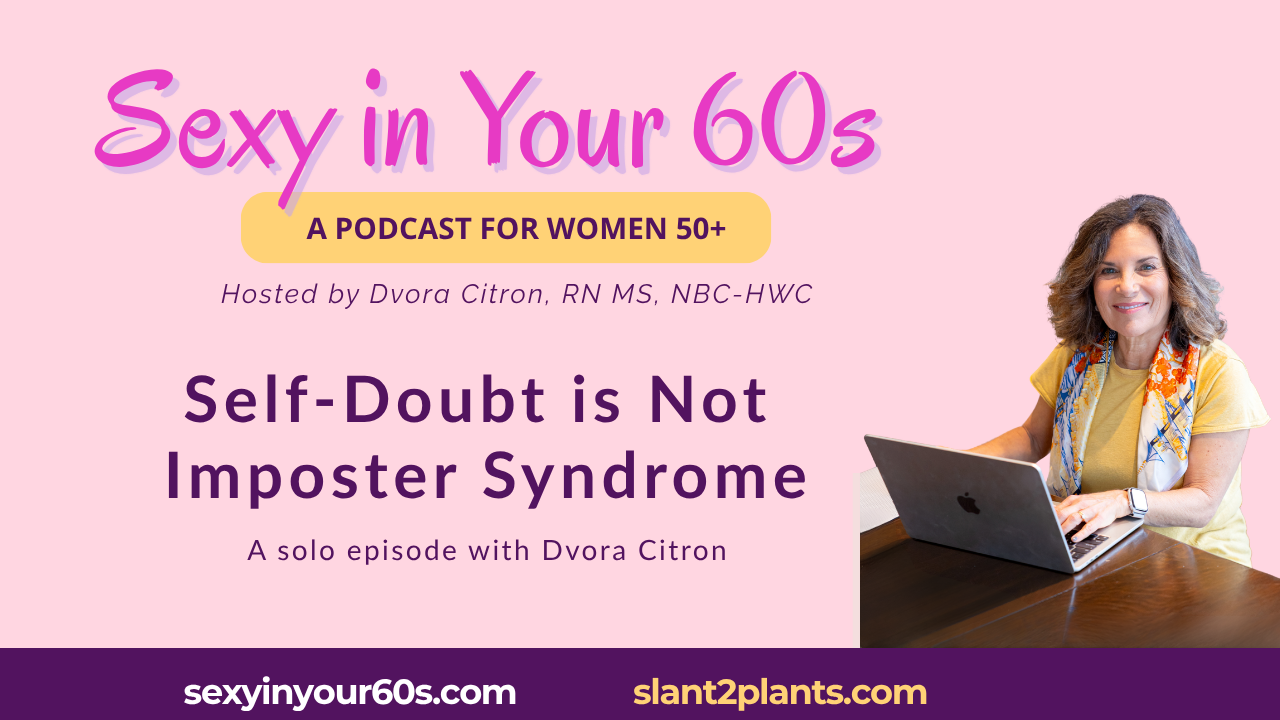
Nothing in this episode is medical advice. It is education and lived experience. Anything you are weighing for your own health is a decision to make with your own healthcare provider, who knows your history and your whole picture.
Back in July I was at a neighborhood wine tasting, and someone asked me what I do.
I said I'm a health coach. I said I help people discover their wellness vision and build goals and take steps toward it. And I watched her face do the thing faces do when someone has just heard a string of words that did not add up to a picture. She nodded. She said that sounds wonderful. And then she looked over my shoulder for someone else to talk to.
Forty years as a nurse, and in all that time nobody ever looked confused. You would have known where I stood in a building. You would have known what I was responsible for and what I was good at.
On the drive home I was quiet in the passenger seat, because I was feeling something I want to name precisely.
What I felt was self-doubt. What I did not feel was imposter syndrome.
The difference, and why it matters
Imposter syndrome is feeling like a fraud when the evidence says you are not. It is the accomplished woman who is convinced she got there by luck and somebody is about to find out. The evidence is right there in front of her and she cannot see it. That is a distortion, and the verdict she has handed down about herself is wrong.
Self-doubt is something else. Self-doubt is not a verdict about who you are. It is information about where you are.
When I could not explain my work at that wine tasting, I was not imagining a gap. There was a gap. That is not a distortion. That is a report from the edge of my competence, and it is accurate.
You have done this. Not at a wine tasting, maybe. In a doctor's office. At a table where you were not sure you were wanted. Some room last week where you made yourself smaller and could not have told anyone why.
Here is why the distinction is worth the trouble. If you call it imposter syndrome, you have located the problem inside yourself. Something is wrong with your thinking. Your perception is broken. The fix becomes internal: work on your confidence, work on your mindset, stop being so hard on yourself.
That framing has helped some women and I am not going to take it away from them. But for a woman in her sixties who is genuinely doing something new, it is the wrong tool. She is not misperceiving. She is early. And when you tell an early person that her accurate read on her own situation is a syndrome, you have added shame to a situation that only needed patience.
Beginner is a stage. A syndrome is a condition. One of those, you move through.
It is not entirely a me problem
Almost nobody knows what health coaching is.
If I say nurse, you have a picture. If I say therapist, you have a picture. If I say personal trainer, you have a picture, and it might be wrong but it is a picture. Health coach lands in a blank space. Some people hear nutritionist. Some hear life coach. Some hear a friendly person who tells them to drink more water.
And even past that, there is a second wall and it is higher. Say I do manage to explain what happens in a coaching relationship. The person still has to believe that paying money and spending real time and doing actual emotional work would change her life. Most people have never seen that happen. They have seen diets. They have seen programs. They have not seen what it looks like when a woman gets a structure around her and someone in her corner for eight weeks.
This past summer I was talking with my cousin. He is seven years younger than me. He has an MBA. He has built and sold successful companies and he is building another one right now. If anyone should be able to follow a description of a small service business, it is him.
The same thing happened. Not rudeness, not disinterest. He simply had nowhere to put it.
That was useful information. Because if a person who builds businesses for a living cannot place what I do, the problem is not that I am bad at explaining it to people who do not think about business. The problem is the category.
What a polished sentence cannot do
I am in a networking group where we go around the room and give our elevator pitch. Every single meeting. Mine is that I help women fifty and above become the CEO of their own healthy aging journey.
I like that line. I built it carefully. And nobody has ever asked me a follow-up question about it.
It sounds good. It does not describe anything. A woman hearing it cannot see herself in a room with me. She does not know what happens, what it costs, or what would be different afterward. It is a flag, not a picture.
I am telling you this instead of quietly fixing it because a lot of us are walking around with a sentence we polished, that we are proud of, that is not landing. And the self-doubt that follows a conversation like that will tell you that you are the problem. You are not. The sentence is a work in progress, and sentences can take years.
You may not be building a business. That is not the point. Every woman reading this is trying to explain some new version of herself to people who knew the old one. The retired one. The divorced one. The one who went back to school. The one who started something at sixty-three. The specifics are mine. The problem is all of ours.
What to actually do with self-doubt
You sit with it. And I want to be precise about what that means, because "sit with it" has become one of those phrases that sounds wise and means nothing.
Sitting with self-doubt means letting it be in the room without letting it drive. Noticing that it showed up. Noticing what it is pointing at. And then doing the thing anyway. Not doing the thing because you overcame the feeling. Doing the thing while you have the feeling.
That is the part people skip. There is a version of this advice that turns sitting with it into permission to stop. And then a year goes by and nothing has moved, and now the doubt has evidence, because you did not do the thing.
Proof and doubt sit next to each other
Here is the part that confuses people, including me.
Many mornings a week I walk at the Lafayette Reservoir, usually with a friend, sometimes with a few. That is the walk and the fitness and the connection and the being outside all at once, which is the whole thing I keep telling you to build.
Lately on these walks, women stop me to tell me they listen to the podcast. They tell me which episode. They tell me what they did about it.
That happens, and then a few days later I am at a party unable to explain what I do.
Both of these are true at the same time, and I want you to hear that clearly, because there is a version of this that says the doubt goes away once you have proof. It does not. The proof and the doubt sit right next to each other, and they will keep sitting next to each other.
The evidence does not erase the feeling. It just means you do not have to believe the feeling.
Self-doubt is something to sit with during change. The work is not letting it become a barrier that keeps you stuck. Those two sentences have to travel together. Either one alone will lead you wrong.
What the work actually looks like
A woman comes to me and she is doing a lot right. She walks. She has read the books. She knows about protein and fiber and strength training. And something still feels off. Her body has changed. Her energy has changed. Her life does not look the way she pictured it at this age, and she has been quietly organizing herself around that disappointment for years without ever calling it that.
We do not start with a meal plan. We start with an honest look at where she actually is, which almost nobody has ever asked her to do without judgment attached.
Then over eight weeks, with a small group of women who are in the same place, we work through it. What she eats now. Where her boundaries went. How she moves in the body she has now, not the one she had at forty. Who she is connected to. What she is not saying out loud. What she wants the next twenty-five years to feel like.
That is the Sexy in Your 60s Coaching Experience. And what changes is usually not the thing she came in for. One of the women who finished told me the shift was that she stopped yearning for the way things used to be and started actually living in the stage she is in.
Forty years of nursing taught me what happens to women's bodies. Living this way myself for eight years taught me what is realistic. The coaching training taught me how to get out of the way so a woman finds her own answer instead of following mine. No single word covers that, but that is what happens.
Taking the seat
There is something underneath all the showing up, and since this season is about taking up space it would be strange not to say it out loud.
I want a voice in this field.
Let me be clear about the room I mean. I am not a physician. I am not one of the well-known menopause influencers with a big platform. I am not in the group of women whose names you already know in this space, and I am not going to pretend otherwise.
What I have is forty years of clinical experience, a board certification, a way of living that I actually live, and a willingness to show up every single week whether or not it is convenient.
Nobody is going to hand me a chair at that table, so I am taking a seat.
That is part of why the podcast goes out every Tuesday, and the blog post gets written, and the newsletter goes out, whether I feel articulate that week or not, whether I have a guest interview or not. It is not discipline for its own sake. It is how you hold a seat once you have taken one.
I am still working on that sentence. I am going to keep working on it. But I stopped waiting for it, and that turned out to be the whole thing.
You do not need the words before you take the seat. You take the seat, and the words come from sitting in it.
One thing to do this week
Think of something you have been circling. Not something you are afraid of. Something you keep almost doing. The class you keep almost signing up for. The conversation you keep almost having. The thing you keep almost saying out loud.
Now ask which one it is. Is this a verdict about who you are, or is this information about where you are?
If it is information, you already know what it is telling you. You are new at this. That is all. Being new is not a character flaw, and not being able to explain yourself yet is not a character flaw either. Both of those are just early.
Do the thing while the feeling is there. That is the whole practice.
One more time because it matters. Nothing in this podcast is medical advice. Any decision about your own health belongs with your own healthcare provider, who knows your history and your whole picture.
Listen to the Full Episode
Episode 44: Self-Doubt Is Not Imposter Syndrome
🎧 Podcast Page
🍎 Apple Podcasts
🟢 Spotify
🎵 Amazon Music
▶️ Watch on YouTube
About Dvora
Dvora Citron is a Registered Nurse, National Board Certified Health & Wellness Coach, Lifestyle Medicine practitioner and the founder of slant2plants®. She hosts Sexy in Your 60s, where women 50 and older get honest conversation about midlife health and aging through science, story, strategies and soul.
slant2plants.com · Blog · Instagram · LinkedIn · Pinterest
If this sounds like where you are
EMERGE: The Naked Truth is a four-week live experience starting October 8. It is about what actually changed in your body after 50 and what you can do about it. Four Thursdays, a small group, and nobody will ask you to share more than you want to.
Which One Are You Avoiding?
Strength, fiber, sleep, alcohol. These are the four foundations that matter most after 50, and most women are solid on three.
The 5-Minute Reality Check is a free live workshop. You'll get an honest score across all four, find your blind spot, and leave with a seven-day move you can actually follow, plus a minimum version for the weeks that fall apart.
Live on Zoom. No replay.
Author
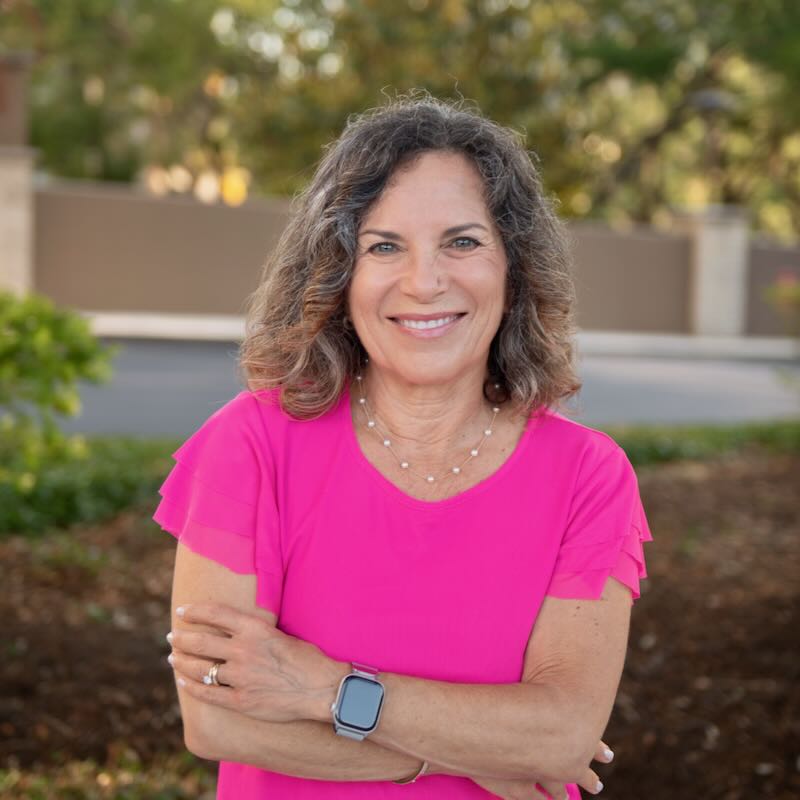
About Dvora Citron
I'm a Registered Nurse with 40+ years of experience, a National Board Certified Health and Wellness Coach, and the founder of slant2plants®, a plant-forward approach to vibrant living, healthy aging, and feeling fully alive in your 60s and beyond.
I write, teach, and coach women over 50 who are ready to nourish their bodies, reclaim their energy, and step into the most confident chapter of their lives.
🎙️ Listen to the Sexy in Your 60s™ podcast: interviews with women and experts on healthy aging, longevity, and what it truly means to feel grounded, confident, and at home in your life after 50.
📅 Ready to go deeper? Book a free Health Coaching Discovery Call
