
The Room Where Women Stop Apologizing
Sep 15, 2026
A woman arrives at a retreat. She has paid for it, flown to it, arranged her whole life around being gone for four days. And she stops just inside the door. She does not put her bag down. She waits to be told where she belongs.
Valerie Mummert watches for that moment. Most people in the room never see it.
Valerie designs in-person retreats for women, and she coaches women through midlife transitions. She has spent years watching what happens when you put a group of women together and give them three days. What she sees in that first hour is a woman deciding, without saying a word, how much space she is allowed to take.
You have probably done it yourself. In a doctor's office. At a table where you were not sure you were wanted. Somewhere last week.
Why this is not a soft topic
Last June the World Health Organization released its first global report on social connection. One in six people worldwide report being lonely. Up to one in three older adults are socially isolated. Loneliness is now linked to more than 871,000 deaths a year, which works out to roughly a hundred an hour.
As a nurse I want to be precise with you about what that means. This is not a mood problem. Social connection shows up in the research as a mortality risk, on the order of things we take seriously in a clinic. So when I ask who you are in a room with, I am asking you a health question.
Valerie says it more plainly. "We deep down have a human craving for meeting face to face. We didn't realize how much we were gonna miss it until it wasn't available to us."
A retreat is not a vacation
"If you're anything like me," she told me, "I go on vacation and I come back exhausted, and I need a vacation from my vacation."
Here is the difference, and it is useful. On a vacation you are trying to come back rested. On a retreat you are trying to come back changed. Which means the first question a good host asks is not where or how much. It is what the transformation is going to be. Everything else gets designed backward from that answer.
That gives you a way to choose one. Read the page and look for who it says it is for. If what you find instead is a destination and a price, you are looking at a vacation in a retreat's clothing.
The part that starts months before you arrive
Valerie's retreat begins the day you say yes. A thank-you card in the mail. An actual leather luggage tag with your name in the window, so when you spot the same tag on a stranger's suitcase at the airport, you already know something about each other. A group chat where someone offers to split an Uber. A list of out-of-office replies you can schedule six months early.
None of that is decoration. It is a woman being told, over and over in small ways, that she belongs there before she has to walk in and find out.
What happens once the door closes
"I see decision fatigue disappearing," Valerie said. Nobody is deciding what is for dinner or checking whether everyone else is all right. She tells people to take their watches off.
On one of the four days she runs a silent morning. No talking to anybody until lunch. It creates, in her word, panic.
"They start negotiating and bargaining. Am I allowed to text people, because that's not talking? Am I allowed to listen to music? Can I go for a walk?" She tells them she is not the silent police, and then she names what is underneath it. "We don't know how to be quiet with ourselves. We're actually terrified of being quiet with ourselves."
Ask yourself when you last sat with nothing on. No podcast, no phone, no list.
Now I want to talk to you for a minute, because this next part is about you
"Usually the first thing people will say is I don't have the time, or I don't have the money. And what they're really saying is, I don't think that I'm valuable enough to spend the time."
And then she said something you will probably recognize. A woman who would pay for an expensive camp for her child without blinking will not consider four days for herself, because that sounds selfish.
Valerie's question back is the one almost nobody asks you. What is it going to cost you if you don't go?
Sit with that one before you decide you already know the answer.
The version that fits an ordinary life
Most of us are not flying to Arizona this year, and Valerie does not pretend otherwise. She takes what she calls mini retreats. A hotel five miles from her own house, Friday afternoon to Sunday morning. No laptop. Nobody to be responsible for.
She plans her year on an eight-foot dry-erase calendar, and after the family obligations go on it, the next thing she blocks is her own time. Not what is left over. As she put it, "We give ourselves the leftovers if there are any leftovers."
And she is blunt that the change dies without a plan. The group from the retreat where she and I met set a standing Tuesday hour. Whoever can come, comes. That is what turns four good days into something that holds.
An 86-year-old and a forklift
We got to talking about our mothers, who are the same age. Valerie asked hers what was still on her bucket list. Her mother said she had always wanted to drive a forklift.
"It just looks like it would be fun."
This is a woman who raised four children close together, was a single mother for much of it, and whom Valerie says she never once thought of as fun. "I want to keep living until I die," Valerie said. "I don't want to just waste away because I don't have anything better to do."
I am focused on longevity, and I will tell you plainly that there is no point in living longer if you are doing it alone. Connection is not the garnish on healthy aging. It is one of the walls holding the house up.
What sexy means to her now
I ask every guest the same closing question. Valerie answered it from inside her closet.
"When you walk into your closet and you go, I have nothing to wear, is that a true statement? No. You have a closet full of clothes. What you're really saying is, nothing in here suits me." So you take it all out, keep only what you love, and let the rest go.
"That's what it feels like to be sexy in your 60s. Being comfortable with who you are, not letting somebody else make the rules for you." She added, with no apology at all, that she often tells people she is being age-inappropriate, because she is going to break somebody's rules somewhere.
Let me add one thing to that. When you hold a garment up, your first question is usually how do I look in this. The better question, and the one that will actually tell you whether something suits you, is how does this make me feel.
That question works on a lot more than clothes.
Listen to the Full Episode
Episode 43: The Room Where Women Stop Apologizing, with Valerie Mummert
🎧 Podcast Page
🍎 Apple Podcasts
🟢 Spotify
🎵 Amazon Music
▶️ Watch on YouTube
Connect with Valerie Mummert
MyRetreat.me
valeriemummert.com
Instagram @valeriemummert3
LinkedIn
About Dvora Citron
Dvora Citron is a Registered Nurse, National Board Certified Health & Wellness Coach, Lifestyle Medicine Practitioner, and the founder of slant2plants®.
She hosts Sexy in Your 60s to bring women the real ingredients of vibrant aging through science, story, support, and soul.
Ready to Feel Sexy, Confident, and Vibrant in Your 60s and Beyond?
Start with the 5-Minute Reality Check for Women 50+. It is free, it takes about an hour, and the next one is Thursday, September 17.
Nothing in this episode is medical advice. It is education and one woman's experience. Anything you are weighing for your own health is a decision to make with your own healthcare provider, who knows your history and your whole picture.
Which One Are You Avoiding?
Strength, fiber, sleep, alcohol. These are the four foundations that matter most after 50, and most women are solid on three.
The 5-Minute Reality Check is a free live workshop. You'll get an honest score across all four, find your blind spot, and leave with a seven-day move you can actually follow, plus a minimum version for the weeks that fall apart.
Live on Zoom. No replay.
Author
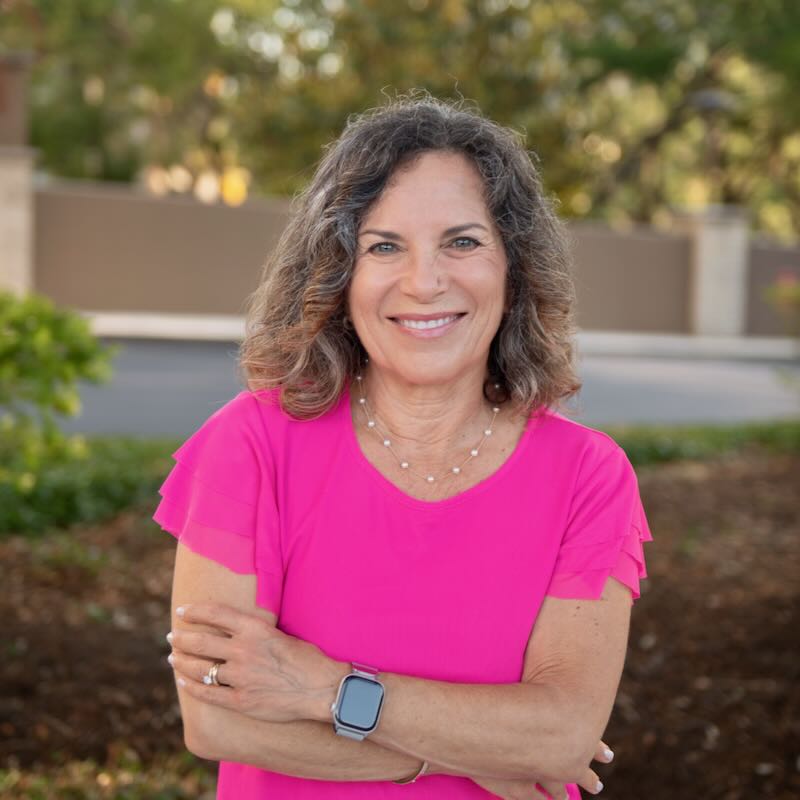
About Dvora Citron
I'm a Registered Nurse with 40+ years of experience, a National Board Certified Health and Wellness Coach, and the founder of slant2plants®, a plant-forward approach to vibrant living, healthy aging, and feeling fully alive in your 60s and beyond.
I write, teach, and coach women over 50 who are ready to nourish their bodies, reclaim their energy, and step into the most confident chapter of their lives.
🎙️ Listen to the Sexy in Your 60s™ podcast: interviews with women and experts on healthy aging, longevity, and what it truly means to feel grounded, confident, and at home in your life after 50.
📅 Ready to go deeper? Book a free Health Coaching Discovery Call
