
One Year After Spinal Fusion: Stronger, Wiser, and Why Strength Training Is Now a Heart Health Essential
Jul 03, 2026By Dvora Citron, RN, MS, NBC-HWC
Picture this: I'm in Alaska, hiking what should have been a breathtaking trail. And it was — except I was barely making it. My right leg felt impossibly heavy. Every time I tried to lift my right thigh, there was this combination of weakness and pain that I couldn't explain. The terrain was challenging, and I was wearing knee-high rubber boots that weighed a ton — so I kept telling myself that was the reason I was struggling. I dismissed it. I pushed through. But deep down, something felt wrong.
What I didn't know then was that a nerve in my lumbar spine was being severely compressed — and the weakness I was experiencing in my right leg was a neurological symptom, not a fitness problem. I wasn't out of shape. My spine was failing me.
It wasn't until I started having to physically lift my right leg with my hands just to get into the car that I knew I could no longer ignore it. That's when I finally went back to my doctor — and the MRI told the whole story. (You can read the full story of how I got there, my surgery decision, and early recovery in my earlier posts: From Pain to Power, 4 Weeks Post-Op, 8 Weeks Post-Op, and Four Months Post-Op.)
On July 2, 2025, I had spinal fusion surgery at L4-L5. And today, one year later, I'm writing this from the other side of that journey — and from a place of genuine strength that I'm not sure I've ever felt before.
From Barely Lifting My Leg to Working with a Personal Trainer
Recovery from spinal fusion surgery is not a straight line. Even just a few months ago, I still had noticeable pain and clearly unequal strength between my right and left legs. When I climbed stairs, took a long walk, or pushed through a PT session, the asymmetry was impossible to ignore. My right side — the side that had been neurologically compromised — was still working hard to catch up.
Today? They're not perfectly equal. I may never be perfectly symmetrical, and I've made peace with that. But here's what's remarkable: I rarely notice the difference in my everyday activities anymore. Getting in and out of the car, walking on uneven terrain, climbing stairs, playing with my grandchildren — my body just moves. Without me having to think about it, compensate for it, or manage around it.
That's not a small thing. That's everything.
I've also hit a milestone I'm particularly proud of: I've graduated from formal physical therapy. I now work with a personal trainer to continue building the strength, power, and functional fitness that will carry me through the next decade and beyond. This transition from "recovering patient" to "athlete in training" — because that's genuinely how I think of myself now — reflects how far this journey has come.
The Science That's Fueling My Motivation: A Brand-New Study
I've always known that strength training matters. As a nurse and health coach, I've been recommending it to clients for years. But a landmark study published just this week — on June 17, 2026, in JACC, the flagship journal of the American College of Cardiology — has given me (and all of us) even more powerful reasons to keep lifting.
The study, led by Dr. Tianyue Zhang at the Harvard T.H. Chan School of Public Health, analyzed data from 117,025 women across the long-running Nurses' Health Study. These were real women — nurses, middle-aged and older — tracked over years, reporting their exercise habits and health outcomes. The findings are striking:
Women Who Strength Trained Had a 20% Lower Risk of Major Cardiovascular Disease
Women who did two or more hours of resistance training per week had a 20% lower risk of major cardiovascular events — including heart attack, stroke, and coronary interventions — compared to women who did none. Each additional hour per week was associated with a 5% further reduction in CVD risk.
A 44% Lower Risk of Heart Attack
This is the number that stopped me in my tracks. Women who did two or more hours of resistance training per week had a 44% lower risk of myocardial infarction (heart attack) compared to inactive women. And each additional hour per week was associated with a 14% lower risk of heart attack. For context, that's comparable to the risk reduction seen with some pharmaceutical interventions — achieved through movement.
The Triple Combination Is the Most Powerful
The study looked at three behaviors together: resistance training, aerobic activity (at least 150 minutes per week of moderate-to-vigorous activity), and limiting sedentary time (specifically, TV watching, now recognized as an independent cardiovascular risk factor). Women who met all three recommendations had the lowest risks of major CVD, heart attack, and stroke. The message is clear: it's not about one magic behavior. It's about the full picture of how we move — and how much we sit.
Strength Training Adds Benefit Even Among Already-Active Women
Here's what I found especially meaningful: even among women who were already meeting aerobic exercise guidelines, adding resistance training provided additional cardiovascular protection. Women who did both RT for 2+ hours per week AND 150 minutes of aerobic activity had a 45% lower risk of heart attack compared to inactive women. Aerobic exercise alone is not enough. Strength training is not optional — it is additive.
This Is Understudied in Women — Until Now
As Dr. Zhang noted, "Despite its established health benefits, RT is often overlooked as a prevention strategy for CVD, and its impact on CVD risk — especially in middle-aged and older women — remains understudied." This study fills a critical gap. And the Editor-in-Chief of JACC, Dr. Harlan Krumholz of Yale, put it plainly: "It should be included in a well-rounded health routine to support function and longevity."
These findings, combined with the American Heart Association's 2023 updated Scientific Statement (which concluded that just 30–60 minutes of resistance training per week is associated with maximum reduction in all-cause mortality and cardiovascular disease risk), paint a compelling and consistent picture: strength training saves lives — especially women's lives.
What My Routine Looks Like at One Year
I'm sharing this not as a prescription, but as a window into what sustainable, joyful, evidence-based movement looks like for me at this stage of my life and recovery:
Personal Training: Two sessions per week with a trainer who understands my history, my goals, and my spine. We focus on progressive overload, functional movement, and building the strength and power I need for the life I want to live.
Pilates: Two to three times per week. Pilates has been my spine's best friend throughout this entire journey — for core stability, spinal alignment, and mind-body connection.
Walking: Daily, 2 to 5 miles depending on the day. Still my medicine, my meditation, and my joy.
Peloton: Back in the saddle — literally. Low-impact cycling builds cardiovascular fitness without loading the spine, and it never feels like a chore.
Plant-Based Nutrition: The foundation of everything. High-protein smoothies, anti-inflammatory whole foods, and intentional hydration support every training session and every recovery. Strength training without adequate protein is like building a house without mortar.
If I'm being honest, the hardest part of this entire year hasn't been the pain, or the asymmetry, or the slow pace of neurological recovery. It's been showing up consistently to do the work — especially on the days when I didn't feel like it, when fatigue won, when life got in the way. Consistency is unglamorous. It doesn't make for dramatic before-and-after photos. But it's the only thing that actually works. Every session I showed up for, even imperfectly, is in my body now. That's what a year of resilient movement looks like from the inside.
What This Anniversary Means to Me
One year ago, I couldn't lift my leg into the car. This week, I'm working with a personal trainer, hiking trails, and feeling stronger than I have in years. That arc — from compression and pain to power and purpose — is what this anniversary is really about.
And here's the detail that isn't lost on me: this July, I'm heading back to New York. Just like I did last year, in the sixteen days before my surgery. I remember that trip well — the excitement of the city, and underneath it, the quiet weight of knowing what was coming. I didn't know then how the year would unfold. I didn't know how hard the recovery would be, or how transformative. Now I'm making the same trip, and everything is different. Same city. Completely different woman. That feels worth marking.
The science is unequivocal: resistance training is one of the most important things a woman over 50 can do for her heart, her bones, her metabolic health, and her longevity. And the newest research shows us that it's not just beneficial — it's protective in ways we're only beginning to fully understand.
I'm not done. I have decades of hiking, paddleboarding, dancing at weddings, chasing grandchildren, and showing up fully for the work I love still ahead of me. And I intend to meet all of it from a place of strength.
If you're a woman who has been putting off strength training — because of time, or intimidation, or a past injury, or simply not knowing where to start — I want you to know that it's never too late. And you don't have to figure it out alone.
In fact, Resilient Movement is one of the seven pillars of my VIBRANT Method — and in my Sexy in Your 60s Coaching Experience, we dedicate an entire module to it: Module R. We explore how to build strength progressively and sustainably, how to move in ways that protect your joints and spine, and how to make resistance training a non-negotiable part of your longevity toolkit — no matter where you're starting from.
The next cohort of Sexy in Your 60s is coming — and I'd love for you to be on the waitlist. This is intimate, high-touch coaching for women who are done leaving their health for later. We'll work through all seven pillars of the VIBRANT Method together, including Module R: Resilient Movement, where we build the strength practice that will carry you through the decades ahead. Spots are limited and waitlist members get first access.
Join the waitlist at www.slant2plants.com — and let's build something lasting, together.
Here's to Year Two — and to all the strength still ahead. And to the adventures waiting on the other side of it: the trails I haven't hiked, the places I haven't explored, the moments of wonder that are only possible when your body can show up fully. Adventure travel has always been woven into how I live and how I coach — it's not a reward for getting healthy. It's part of what being healthy makes possible. I can't wait to see where this stronger, wiser body takes me next.
With gratitude and power,
Dvora
Sources: Zhang T, et al. "Resistance Training and Cardiovascular Disease Risk in Women." JACC. Published June 17, 2026. | Paluch AE, et al. "Resistance Exercise Training in Individuals With and Without Cardiovascular Disease: 2023 Update: A Scientific Statement From the American Heart Association." Circulation. 2023;149(3). doi: 10.1161/CIR.0000000000001189
Disclaimer: The information shared on my website and in all related content is for educational and informational purposes only. It is not intended as medical advice or a substitute for professional care. Please consult with your own healthcare provider before making any changes to your diet, lifestyle, or health practices. As a Registered Nurse and Board-Certified Health & Wellness Coach, I offer guidance rooted in evidence-based practices, but I do not diagnose, treat, or prescribe. Each person's health journey is unique — please work with your own licensed provider for personalized support.
Which One Are You Avoiding?
Strength, fiber, sleep, alcohol. These are the four foundations that matter most after 50, and most women are solid on three.
The 5-Minute Reality Check is a free live workshop. You'll get an honest score across all four, find your blind spot, and leave with a seven-day move you can actually follow, plus a minimum version for the weeks that fall apart.
Live on Zoom. No replay.
Author
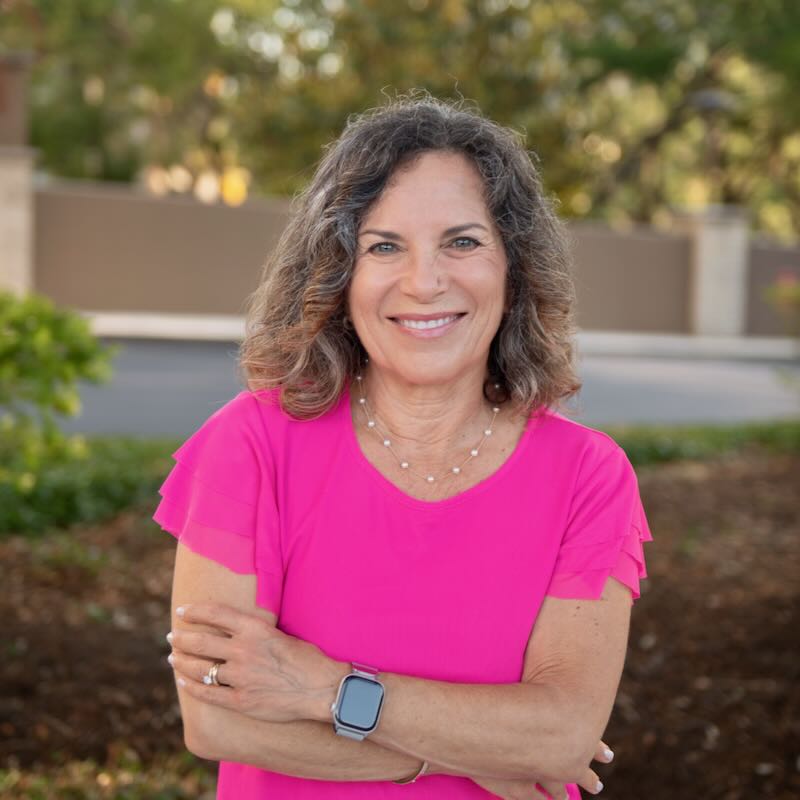
About Dvora Citron
I'm a Registered Nurse with 40+ years of experience, a National Board Certified Health and Wellness Coach, and the founder of slant2plants®, a plant-forward approach to vibrant living, healthy aging, and feeling fully alive in your 60s and beyond.
I write, teach, and coach women over 50 who are ready to nourish their bodies, reclaim their energy, and step into the most confident chapter of their lives.
🎙️ Listen to the Sexy in Your 60s™ podcast: interviews with women and experts on healthy aging, longevity, and what it truly means to feel grounded, confident, and at home in your life after 50.
📅 Ready to go deeper? Book a free Health Coaching Discovery Call
