Moving to a 55-Plus Community in Midlife: What Actually Happens to Your Social Life
Jun 16, 2026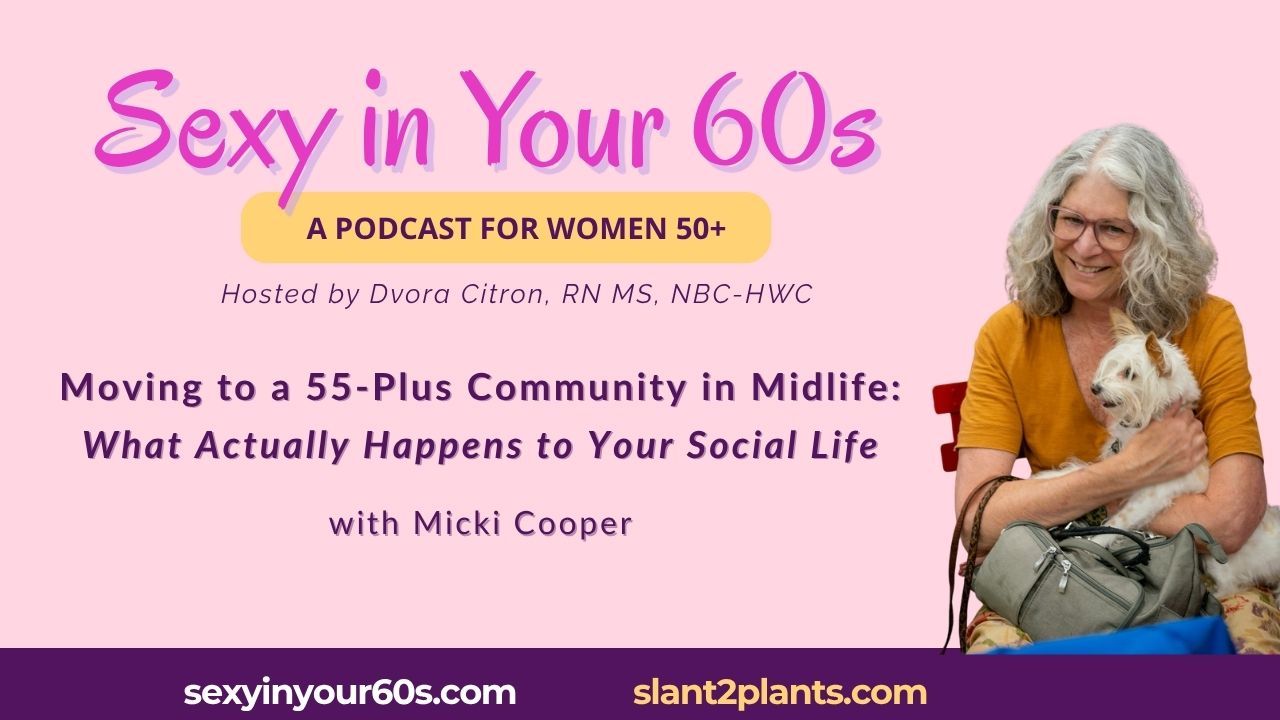
There is a question most of us never think to ask at this stage of life: did I choose my social environment, or did I just end up here?
For the majority of women I talk with, the honest answer is the second one. Our social lives formed around circumstances: where we worked, where our kids went to school, what neighborhoods we could afford. Connection happened because life arranged it, not because we arranged it ourselves.
Which is exactly why a conversation I had recently has stayed with me.
A friend of mine, someone I have known for 36 years, recently did something most people would not think to do until they absolutely had to. She and her husband looked at where they were in life, looked at what they wanted the next chapter to look like, and deliberately chose to move into an environment designed for connection and active aging. Not because they were struggling. Because they were thinking clearly.
She moved to Rossmoor, a 55-plus community in Walnut Creek, California. And what she has found there has made me think differently about how all of us approach this question of social environment, and whether we are being nearly as intentional about it as we could be.
What Actually Drives the Decision
The practical reasons for the move were real. My friend had been dealing with hip and knee issues, and their Orinda home had stairs she was navigating multiple times a day. Living on one level was not a luxury. It was a health decision. And she told me that since the move, the pain she had been managing for years has largely disappeared.
But that was not the whole story. Underneath the practical factors was something more deliberate: she wanted to build social infrastructure before she needed it, not after.
This matters more than it might sound. Most of us wait until loneliness or loss forces the issue. We stay in our homes, in our familiar neighborhoods, and assume connection will continue to happen the way it always has. But the research on social health tells a different story. The conditions that generated our friendships: shared proximity, daily contact, common life stage. Most of those conditions quietly disappeared in midlife. They did not announce themselves. They just stopped.
My friend saw this coming. She wanted to be in a place where her husband would have more opportunities for individual friendship, not just the couple friendships they had built together over decades. She wanted to be somewhere that would feel livable if one of them was on their own someday. She wanted, in her words, to develop circles before they were needed. That kind of thinking ahead is not morbid. It is wise.
What People Have Wrong About These Communities
When she told people about the move, she got a reaction I suspect many women would recognize. One person's face shifted almost immediately toward associations with assisted living and dementia care. He did not understand what kind of place she was describing.
This misunderstanding is worth taking seriously, because it keeps a lot of women from considering an option that might genuinely serve them.
A community like Rossmoor is for people who can live independently and want to do so with more support, more access, and more connection built into the fabric of daily life. It is not a step toward dependency. It is a choice for engagement. Over 200 clubs and organized activities. Fitness facilities, pools, golf, bocce, lawn bowling, dance. Drama groups, book clubs, art classes, writers' circles. Travel programs, bus trips into the city, an active weekly community newspaper that reads, she told me, like a place you would want to live.
And the age range is broader than most people assume. Only one person in a couple needs to be 55. Some residents move in considerably younger. The community reflects a real range of life stages, not the monolithic picture that the words "retirement community" tend to conjure.
The Architecture of Friendship, Rebuilt on Purpose
Here is what the science of friendship consistently shows: the two most powerful conditions for connection to form are proximity and repeated contact. Not chemistry, not compatibility, not luck. Just being near the same people, again and again, with some shared context.
This is exactly what most midlife women are missing. The containers that provided those conditions: school, workplace, children's activities, religious community. These have shrunk or disappeared. And without those containers doing the quiet work of generating connection, we have to build the conditions ourselves. Most of us do not know how, and most of our environments do not help.
A designed community changes that equation. My friend moved into a cul-de-sac where she simply made herself visible. She waved to neighbors. She was outside. She said yes. Within months, her street had organized two casual outdoor gatherings. She joined a weekly neighborhood group that meets in someone's driveway to talk. She joined a book club and started art classes. She is looking at the drama group and a writers' circle specifically for non-published writers, which she described as "no pressure, just like-minded people."
"People are open to these kinds of things," she said. "And I find that amazing. We never did that in Orinda."
What she is describing is not magic. It is proximity doing its work. The environment is engineered for it, and she showed up.
What Surprised Her Most
My friend is one of the most naturally connected people I know. She was not going to Rossmoor hoping to finally figure out friendship. She went in knowing she was good at it. And she still found herself surprised.
The depth of some connections came faster than she expected. A neighbor in her mid-80s, Brenda, became someone she felt genuinely close to within just a few months. When Brenda's spot in an assisted living community near her daughter finally opened up and she moved out, my friend went across the street and said: "I've only known you a couple of months, but I think I'm going to cry." That is not a small thing. That is the kind of connection that is harder to stumble into when everyone is behind their own front door on their own quiet suburban street.
She also talked about something she had not fully anticipated: the pleasure of meeting people who had lived completely differently than she had. People who came from different professional worlds, different places, different stories. "I wanted to know other people's stories," she said. "And people here are incredible. You go into their home and you realize you're looking at a real artist, a real life."
There is a particular kind of expansion that comes from intentional proximity to people you would never have met in your regular life. She is finding it. And she is finding it because the environment makes it easy to reach across.
A Question Worth Sitting With
A 55-plus community is not the right answer for everyone, and it is not the only answer. But the underlying question it represents is one I think every woman in midlife should take seriously: are you in an environment that is actually working for your social health, or are you just staying where you are because staying is easier than deciding?
Most of us drift. We inherit our social environments and assume they are roughly fine. We do not ask whether the conditions for real connection are present in our daily lives, or whether we have inadvertently built a life that makes friendship structurally difficult.
My friend asked the question. She decided. And what she found on the other side of that decision is a life that feels, she told me, like what retirement was always supposed to look like.
She described what she wakes up to: walking outside in the morning to greenery and hills, the sense of being somewhere that holds her rather than requiring her to maintain it. "It's almost like I feel, even though I haven't worked for a long time, I feel like, oh, this is what retirement is. This is what we get to do in this phase of our life."
That feeling of ease, of being held by your environment instead of fighting it, is not nothing. It is, in fact, one of the things health and longevity research points to consistently: the quality of your daily life, including who surrounds you and how easy or hard it is to connect with them, shapes your health in ways that go very deep.
She is building something. Intentionally. Before she needs it. That is the move.
Listen to the Full Episode
Episode 30: Moving to a 55-Plus Community in Midlife: What Actually Happens to Your Social Life
🎧 Podcast Page
🍎 Apple Podcasts
🟢 Spotify
🎵 Amazon Music
▶️ Watch on YouTube
About Dvora Citron
Dvora Citron is a Registered Nurse, National Board Certified Health & Wellness Coach, Lifestyle Medicine Practitioner, and the founder of slant2plants®. She hosts Sexy in Your 60s to bring women the real ingredients of vibrant aging through science, story, support, and soul. Her work helps women 50 and older create the health, confidence, and longevity they want in ways that feel realistic and sustainable.
slant2plants.com
Blog
Facebook
Instagram @slant2plants
LinkedIn
Pinterest
Ready to Feel Sexy, Confident, and Vibrant in Your 60s and Beyond?
The next round of the Sexy in Your 60s Coaching Experience is coming soon. Join now and start your transformation today.
Sign up at: slant2plants.com/sexy-in-your-60s
This content is for informational and entertainment purposes only. It does not constitute medical advice and is not a substitute for professional medical guidance. Reading this post does not create a patient-client relationship. Always consult your primary care provider or a qualified health professional before making changes to your health or lifestyle.
Which One Are You Avoiding?
Strength, fiber, sleep, alcohol. These are the four foundations that matter most after 50, and most women are solid on three.
The 5-Minute Reality Check is a free live workshop. You'll get an honest score across all four, find your blind spot, and leave with a seven-day move you can actually follow, plus a minimum version for the weeks that fall apart.
Live on Zoom. No replay.
Author
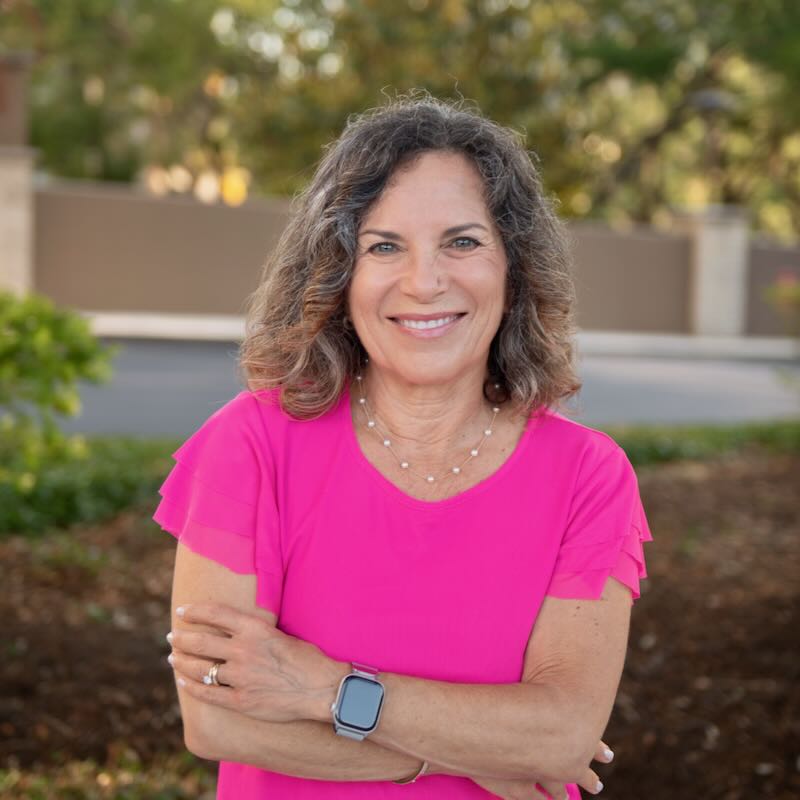
About Dvora Citron
I'm a Registered Nurse with 40+ years of experience, a National Board Certified Health and Wellness Coach, and the founder of slant2plants®, a plant-forward approach to vibrant living, healthy aging, and feeling fully alive in your 60s and beyond.
I write, teach, and coach women over 50 who are ready to nourish their bodies, reclaim their energy, and step into the most confident chapter of their lives.
🎙️ Listen to the Sexy in Your 60s™ podcast: interviews with women and experts on healthy aging, longevity, and what it truly means to feel grounded, confident, and at home in your life after 50.
📅 Ready to go deeper? Book a free Health Coaching Discovery Call
